

The Community Conundrum: What's the Perfect Size?
The decision to select a home involves more than merely choosing a house; it also involves choosing a lifestyle. Often overlooked in making this decision is the size of the community in which one decides to live. Is bigger better, or is exclusivity and low-density living a more refined way of living?
As Bengaluru is fast urbanizing, the skyline of this metropolis is fast changing: a shift in preference from real estate to appreciation. Studies about property indicate that low-density communities in Sarjapur have appreciated 20-30% more than their high-density apartment clusters. This is due to better air quality, decreased traffic congestion, and superior infrastructure planning.
Let's explore why a perfectly sized community isn't about how many homes are packed into an area, but about how space, design, and planning create a livable and sustainable environment. For those seeking this refined way of living, JRC Palladio is the perfect example of a community that embodies these principles.
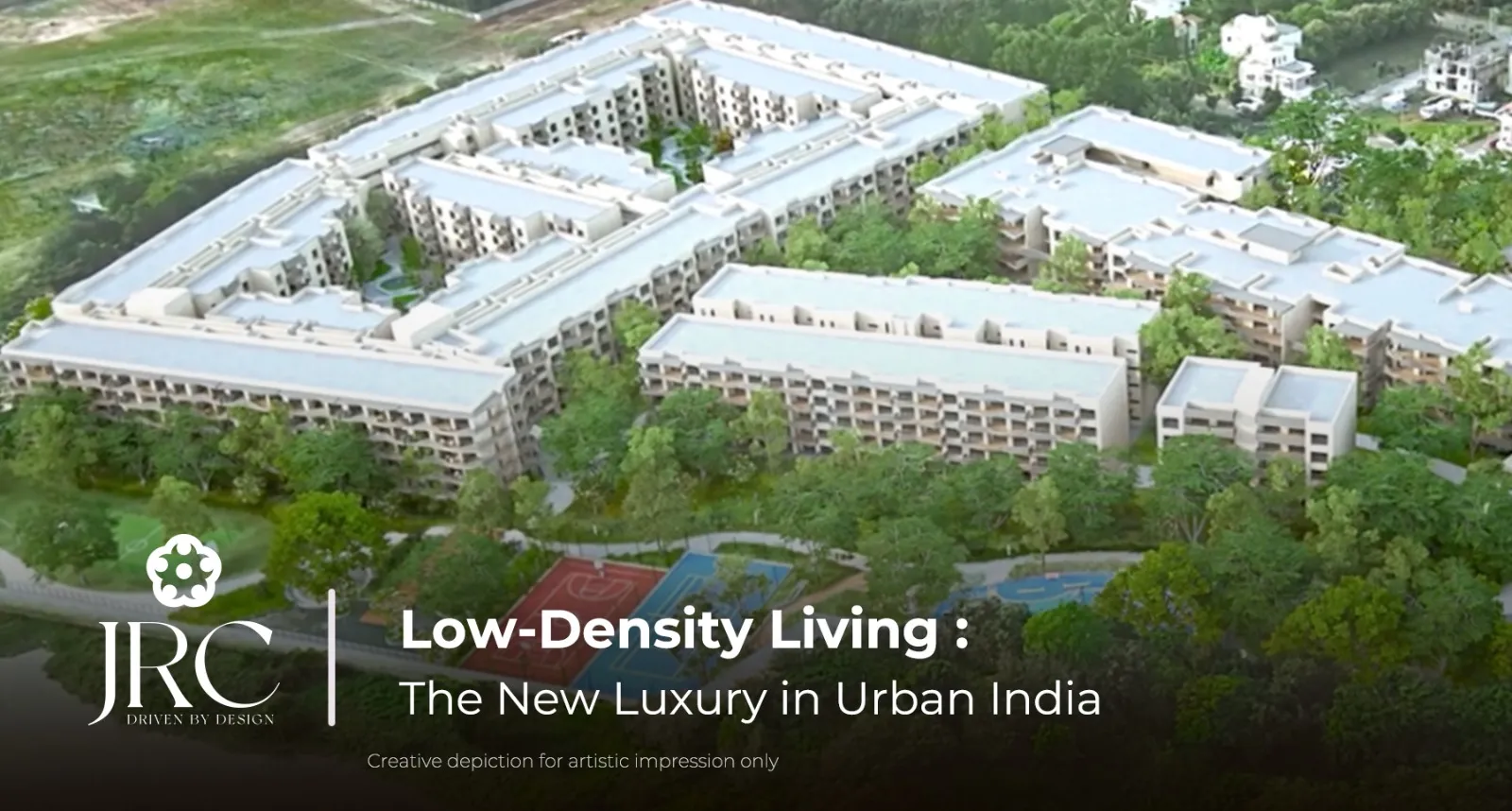
Recently released Bengaluru residential reports state that 250 to 300 families often stay within a single acre of high-rise apartments, congesting common amenities. In this context, it can be inferred that low-density communities have an intake of fewer than 50 families per acre, ensuring considerable open spaces with good air circulation and a stress-free living ambiance.
JRC Palladio follows this approach by offering spacious villa plots with No UDS (Undivided Share of Land), allowing full ownership. With wide roads, exclusive green zones, and luxury villa layouts, residents enjoy an environment that promotes peace and exclusivity. This makes it a prime choice for investment in Sarjapur.
According to a Karnataka State Pollution Control Board study, PM2.5 levels are higher in densely populated residential complexes, which can cause respiratory issues and stress-related disorders. In contrast, the low-density villa communities with open courtyards and lush green zones promote healthy lifestyles.
The air quality is well maintained, and an ambiance is preserved at JRC Palladio due to tree-lined pathways, natural air ventilation, and dedicated green spaces. This project has courtyards and double-height ceilings to bring in more sunlight and ventilation, and it has brought the residents closer to nature.
In high-rise mega-communities, the common facilities like gyms, swimming pools, and clubhouses become overpopulated, which defeats the purpose. According to a 2024 Bengaluru Housing Study, residents in high-density projects complained of waiting longer for gym equipment and misuse of clubhouse facilities.
JRC Palladio maintains the luxury amenities exclusively for the residents. With a 25,000 sqft Grand Clubhouse spread over 2 acres, the project offers:
This means more accessibility, privacy, and a truly luxurious lifestyle.
Safety is the cardinal concern in the development of urban communities. According to Bengaluru's Residential Safety Index, gated low-density communities report 30 per cent fewer security incidents than a high-density complex, as access control is challenging due to multiple entry points.
JRC Palladio is designed with secure gated access, 24/7 surveillance, and controlled entry points to ensure complete peace of mind for the home owner. Its structured layout ensures a tight-knit yet exclusive community, enhancing privacy naturally.
According to market reports, properties in low-density communities appreciate faster as land availability is limited and more demand is placed on spacious living.
For example, luxury villa projects in Sarjapur attract 15-20% annual appreciation, way ahead of high-density apartment clusters where the supply generally outstrips the demand. JRC Palladio, being a full plot ownership model, with classical high-design architecture and a premium location, is one such smart investment that will fetch long-term value.
A well-balanced community should offer neighborhood warmth without compromising on space, privacy, and exclusivity. JRC Palladio achieves this balance through:
If you’re looking for a home that offers space, exclusivity, and long-term value, low-density living is the ideal choice. With Bengaluru’s urban expansion, villa communities in Sarjapur are leading the way in redefining residential comfort and investment potential.
JRC Palladio is the epitome of High Design and Low-Density Living, offering a lifestyle that seamlessly blends space, privacy, and exclusivity.

There is no one-size-fits-all answer. Families seeking privacy, open spaces, and a quieter environment may prefer low-density communities, whereas those looking for extensive amenities and larger social networks may find larger developments more suitable. The best choice depends on individual lifestyle priorities.
Yes, if they are thoughtfully planned. For example, JRC Sanzio's 39-villa community offers an exclusive clubhouse with a swimming pool, gym & yoga studio, multipurpose hall, indoor games, and outdoor sports courts, demonstrating that a smaller community can deliver a complete lifestyle without overcrowding.
Beyond the number of homes, compare the amount of usable open space, road widths, quality of landscaping, security infrastructure, maintenance standards, amenity access, and parking allocation. These factors typically shape day-to-day living far more than the raw unit count.
Many buyers now prioritize spacious surroundings, better air circulation, reduced congestion, and greater privacy. As lifestyles evolve, demand has increased for communities that offer a more relaxed living environment alongside modern amenities.
Not always. The right choice depends on your lifestyle and priorities. Low-density communities generally provide more open space, privacy, and a calmer environment, while larger communities may offer more amenities and social activities. Buyers should evaluate planning quality rather than community size alone.
The size of a gated community influences privacy, traffic, access to amenities, and the overall living experience. Smaller communities often offer a quieter environment and fewer shared facilities to compete for, while larger developments may provide a wider range of amenities but accommodate significantly more residents.