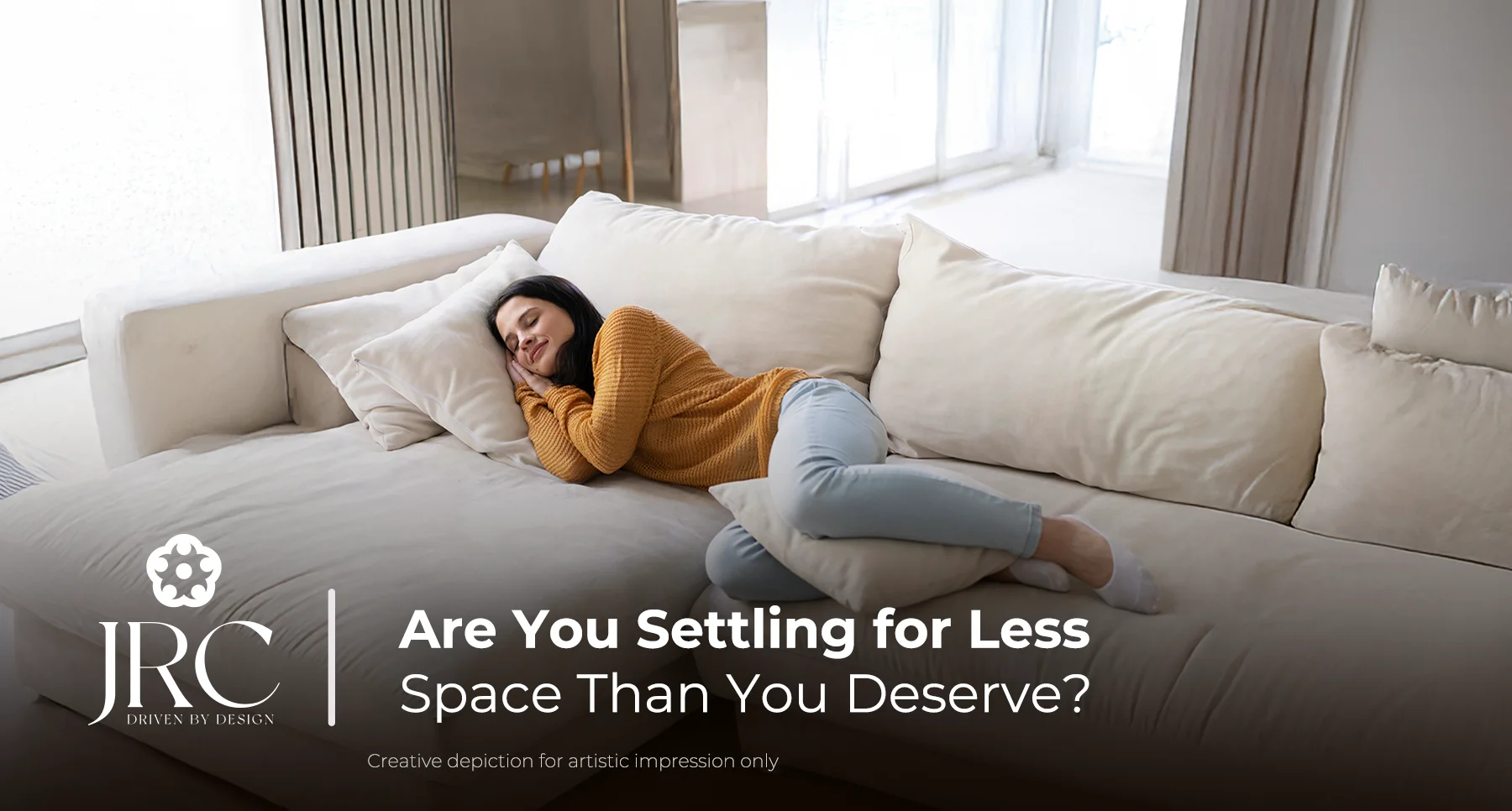

Are You Settling for Less Space Than You Deserve?

July 14, 2025

In an era where “compact” is marketed as clever, discerning buyers are asking a smarter question: What am I giving up for those missing 600 sq ft?

Whether you're buying your first home or upgrading, the space you choose now determines your comfort, your resale value, and your ability to grow into your home, without outgrowing it.

What Does 2000 Sq Ft Really Mean?

In a well-designed 2000 sq ft apartment (like those at JRC Wildwoods), you gain:

  • A larger living room for hosting without compromising movement
  • A dedicated WFH home / Workstation in Room
  • Children’s space that doesn’t eat into common areas
  • Oversized balconies that feel like an outdoor room
  • Storage and walk-in wardrobes that free your bedrooms from clutter

Compare that to 1600 sq ft units that often sacrifice these nuances—and you’ll see why size isn’t indulgence, it’s foresight.

The Long-Term Equation: Who Are You Planning For?

When you buy 1600 sq ft, you plan for now. When you buy 2000 sq ft, you plan for:

  • Aging parents moving in
  • Children need study zones
  • Guests staying longer
  • Your own wellness: yoga space, hobby corner, morning balcony rituals

A larger home supports lifestyle expansion, without forcing an upgrade every 5–7 years.

Financial Value: Bigger Pays You Back

  • Higher Resale Value: Larger homes appreciate better in periphery zones (10–15% more in Sarjapur, Source: ANAROCK 2024)
  • Better Rent Yields: Bigger units fetch longer-term tenants and higher rents
  • Lower PSF Shock: Often, the price difference is marginal, yet the livability jump is exponential

Wellness & Design: Space Enhances Everything

At JRC Wildwoods, the design intentionally makes 2000 sq ft feel more expansive:

  • Lake-view balconies that open to tree troves
  • Cross-ventilation + natural light across all rooms
  • Privacy zoning: No overlapping noise between bedrooms and social areas

You are buying more than square feet. You are buying

  • Air
  • Light
  • Silence
  • Growth

Final Word: Don’t Compromise for a Cramped Future

A 1600 sq ft home may tick all the boxes today. But a 2000 sq ft home checks tomorrow too. When you invest in more space now, you build a home that adapts with you, not one you’ll need to outgrow.

In a world of small adjustments, this is one investment where more truly is more.

Sources & References

ANAROCK Market Intelligence Report 2024: https://www.anarock.com/reports

What should buyers consider before upgrading to a larger home?

Buyers should consider upgrading when their current home no longer supports their lifestyle. Common signs include a growing family, limited storage, work-from-home space requirements, or the need for greater privacy and flexibility. Choosing a home with a well-planned layout can provide better long-term value than simply purchasing a larger property.

Why should homebuyers look beyond the carpet area when comparing apartments?

While carpet area measures usable space, buyers should also evaluate room proportions, ceiling height, layout efficiency, storage options, balcony design, and natural light. Together, these factors determine how spacious a home actually feels.

What are the signs of a well-designed spacious apartment?

A well-designed spacious apartment shows a handful of concrete signs: efficient circulation with no wasted corridor space, cross-ventilation from windows on more than one wall, ceiling heights and window sizes that maximise daylight, and layouts where the carpet area is used well rather than just a large built-up number.

Does a larger apartment always provide a better living experience?

Not necessarily. A well-designed home with efficient layouts, natural light, good ventilation, and functional spaces can feel more spacious than a larger home with poor planning. The quality of design often has a greater impact on everyday comfort than size alone.

How do you know if your current home no longer meets your family's space requirements?

A home may feel undersized when everyday activities become difficult due to limited storage, cramped living areas, or the lack of dedicated spaces for work, study, or relaxation. Evaluating how comfortably your home supports your lifestyle is often more important than considering square footage alone.

Related Blogs

Why a Site Visit Matters More When Buying a Ready-to-Move Home on Sarjapur Road

Lakeside Living Near Sarjapur Road: A Lifestyle Investment Worth Making

Architect-Designed Home vs. Developer Home: An Honest Framework for Sarjapura Road Buyers

The Definitive 2026 Guide to International Schools Along the Sarjapura Corridor

Why Sarjapura Road Has Become Bangalore's Defining Luxury Address

Top Reasons to Choose JRC Wildwoods for Your Next Home on Sarjapur Road

Discover the Best Nature Themed Apartments in Bangalore: A Guide to Green Living

Apartments Near Electronic City: Connectivity, Amenities & Lifestyle Guide

Ready to Move Apartments in Sarjapur: Pricing, Amenities & Investment Potential

The Rise of Nature-Themed Homes in Bangalore:

Low-Density Living: The New Luxury in Urban India

Looking for Investment? Ready-to-Move-In Is the Way Forward.

LakeSide Living in Bangalore: Beyond Just a View

Clubhouses Are the Heart of a Community, Designed for Life

Balconies That Breathe: Why Outdoor Spaces Matter in City Homes

Are You Settling for Less Space Than You Deserve?

What Is Spatial Openness in Architecture?

Huskur’s Roadway Evolution: A New Era of Connectivity & Growth

Why Living with Fewer Neighbors Could Be the Best Decision You Make!

Big or Small? The Secret to Finding the Perfect-Sized Community!

How to Increase Property Value in Bengaluru: Key Factors

The Wellness Homes Trend Taking Over Bangalore

RERA Rules Every Bangalore Homebuyer Should Know in 2025

Whitefield or Sarjapur? The Answer Might Surprise You!

Sarjapura 2030 Swift City: The Growth Catalyst from KIADB

Minimalist vs Maximalist Homes: Which Design Style Suits You?

Beyond Four Walls: The Rise of Experience-Driven Living

The Future of Home Design: 2025 Trends in Luxury Architecture

What Makes a Home ‘High-Design’? The 5 Principles of Timeless Architecture